To review once again, DNA, the molecular blueprint to life in most cells, is responsible for telling the cell how to make “machinery”, or protein. A gene (piece of DNA) codes for a protein. These proteins then can interact with parts of the cell for different functions. Some proteins are structural, helping the cell maintain it’s shape and form. Other can help in chemical reactions, speeding up the time it takes for completion.
Some proteins, called kinases, work to turn on and off other proteins. These are important for regulating how cells divide, which plays a role in how cancer, which is uncontrolled cell growth, can progress.

Genomic instability refers to how cell can undergo certain processes that favor the damage, or mutation, of it’s DNA aka genome. Certain processes can be transposon activity, mutations in proto-oncogenes and/or tumor supressor genes, and mutations is DNA repair mechanisms.
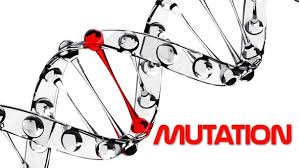
Transposons are pieces of DNA in the genome that can be removed and re-inserted into another part of the genome. They’re referred to as “jumping genes”. These genes can contribute to genomic instability by inserting themselves inside of a gene that codes for an important protein. Since the gene is disrupted by the transposon, the protein cannot be created.
Proto-oncogenes (as describes in sustaining proliferative signaling) are genes that when mutated, causes cancer. Once mutated, it is termed an oncogene. One oncogene that is well studied is Ras. Ras, when functioning properly, tells the cell to grow when turned on. Usually, Ras is turned off when the cell shouldn’t be growing. But, when Ras is mutated, it cannot be turned off. Therefore, it tells a cell to continually grow bypassing all necessary steps to check if the cell should. This leads to genomic damage and instability that is passed on to the new cells after division.
Tumor-suppressor genes (as seen in evading growth supression) are genes that code for proteins important for stopping the cell from dividing. A well known tumor suppressor protein is p53. When working normally, it stops the cell from dividing if there is too much DNA damage. When not working, it allows the cell cycle to progress although there is DNA damage. This leads to genomic instability.
DNA damage repair mechanisms are a plethora of proteins that act to repair DNA when it becomes damaged. With damaged DNA repair mechanisms, the cell cannot fix it’s DNA. This leads to genomic instability.
Sources: http://sitn.hms.harvard.edu/flash/2018/transposons-your-dna-thats-on-the-go/
http://theoncologist.alphamedpress.org/content/4/3/263.full
 Topics in Cancer Biology